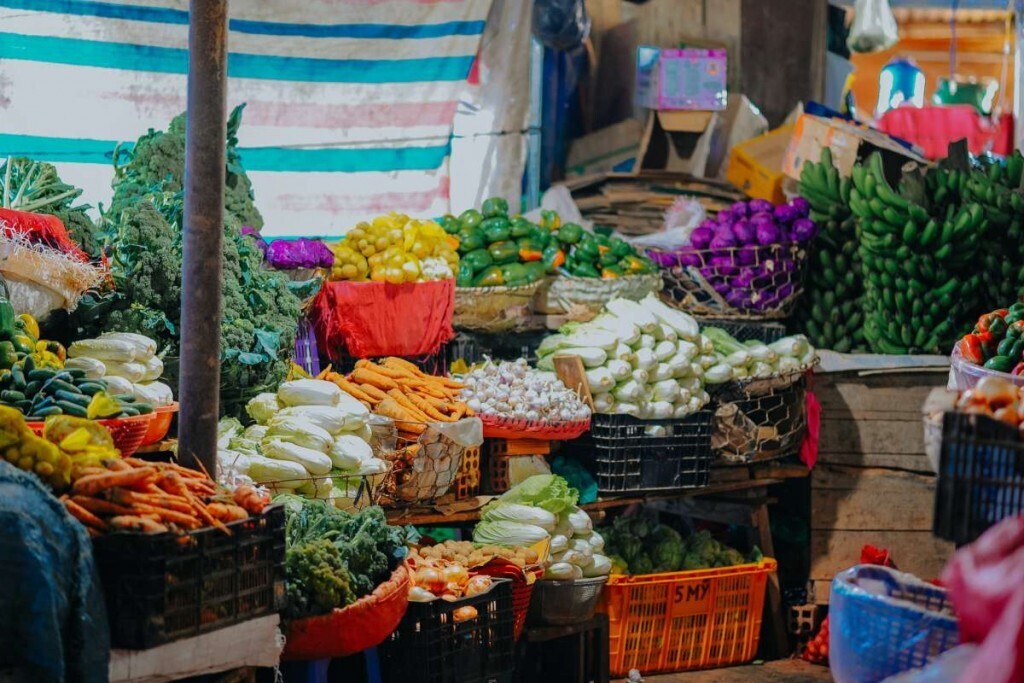
Buenos Aires, December 11, 2025 (NA) – The six best-selling vegetable species in the MCBA (Buenos Aires Central Market): potato, tomato, squash, onion, lettuce, and sweet potato, averaged an increase of 3.7% last month compared to the previous month, thus exceeding the general level of the CPI, which in the CABA advance shows 2.4%. This is despite the tomato's weight in the index falling by -29.2%, although in the accumulated year it registers a 101.7% increase. The onion, in contrast, had the highest annual variation: 80.2%, according to information taken by the Argentine News Agency from the CEPA Center's regular report. The other species showed an upward trend: onion 37.5%, lettuce 24.4%, potato 21.1%, squash 19.0%, sweet potato 13.5%. The annual variation in the segment showed a contraction of 5.5%. The evolutionary trend of the index would cause a 3.9% increase in the Vegetables, Tubers, and Legumes (TVL) segment of the CPI compared to said month, which would cause the weight of the Food and Non-alcoholic Beverages division, which represents 2.2% in the CPI, to show an upward trend of 0.1% in the general indicator for November. Meanwhile, the segment of the four most commercialized fruits in the MCBA (banana, lemon, apple, and orange) shows an increase in their weighted prices of 11.4% compared to October 2025, which allows projecting an increase in the price of the fruit segment of the CPI of 11.3%. It impacts in the order of 1.3% of the weight of the Food division of the CPI, which would indicate an upward trend of 0.2% in the Fruit category of the November CPI.
The Brazilian onion made people cry The lower local supply and the incorporation of imported batches from Brazil explain the increase in onion prices. Between September and November, the early harvest from the NOA and Cuyo regions predominates, while the onion from the southern part of Buenos Aires province only enters at the end of the month, generating high volatility. The significant entry into the MCBA in October stabilized prices, but the limited quality of the offer at the beginning of November, led by Santiago del Estero, pushed prices up. In the last fortnight of November, there was abundant availability, including remnants with quality loss, in a context of low demand that began to put downward pressure on prices.
Prohibitive fruit The only fruit that contracted its prices in November was the banana, -1.4%, while all others showed increases: apple 25.0%, orange 18.2%, and lemon 6.9%. The annual variation in the segment was 31.9%. The banana showed the highest annual variation: 50.3%, and the lemon, the greatest accumulated fall: -2.1%. Despite the increase in apple prices during November, in the accumulated annual total, it is still located below the general inflation rate, showing that the sector "runs behind" the average of the economy and its own internal costs. The causes of this increase respond to a greater demand concentrated in higher quality products and in the cost of fruit preservation.
Prices in supermarkets Supermarkets showed a contraction in the average current prices of the six vegetable species of 13.9% compared to October. While the tomato and lettuce reduced their prices by 49.8%, and 21.0% respectively, the squash, sweet potato, potato, and onion showed an increase in their prices of 72.9%, 22.9%, 15.3%, and 14.4% respectively. The gap between the prices of vegetables in the MCBA and supermarkets, in November, was located at 85.7%, with a contraction of 34.7 p.p. in relation to the previous month. In November, the tomato was the vegetable with the greatest price dispersion among supermarkets: 100.1%, Jumbo showed the highest price, and COTO as the cheapest.